Showing posts with label intersectional awareness. Show all posts
Sunday, July 2, 2017
Novel of the World
Novel of the World - Press this link to view the pdf document called 'Novel Of The World', a tapestry of stories connected by the motifs of food and the acts of eating and nourishment. An extract from my story 'Largesse' can be found on pages 984-990.
Saturday, June 24, 2017
DisPossession & Entitlement
Published in Ceylon Today
Recently we have been informed about the granting of land title deeds as well as houses to some of the most disenfranchised people in this land. Our current Sri Lankan political leaders, as recently as late April this year, have decided to grant each of the 200,000 families of Indian Origin Tamil workers in the estate and plantation areas 7 perches of land, with documents which legally authorise & prove their right to ownership of the land and the houses they build on it.
Prior to this new legislation, the plantation workers and their families had experienced 200 years of existence and occupation in the regional areas of Sri Lanka such as Nuwara Eliya and Hatton, without the entitlement and security of the right to own the land on which they lived.
These workers were employed by successive generations of British, and then Sri Lankan, owners of plantation estates, and lived in 'line houses' near the plantations where they worked, in conditions which many urban Sri Lankan people have often never witnessed or been aware of.
Their daily actual experiences, and their acute awareness of their own compromised status, have been in striking contrast to those conveyed by the iconic tourism portraits of 'smiling tea plantation workers in their colourful clothes' which are used to sell Sri Lankan tea to tea-drinkers all over the world.
The new recognition of their right to own land is a historic decision, which brings into focus some of the most marginalised communities in Sri Lanka. While the land title deeds and documents were being finalised and presented to the first groups of families concerned, in regional areas such as Badulla, I attended the recent launch in Colombo of a book of poetry, which contained several 'portraits' in poetry, of members of these communities.
'Sedahamy, Selvakumari & Others' is the poet Sakuntala Sachithanandan's most recent collection of poems. There are in this volume poems written on a diverse range of subjects, but the ones that stood out most starkly to me are those that dealt with the dispossessed citizens of the plantation and estate sector.
'Selvakumari of Hatton' is a portrait of a woman, who had been 'A street-sweeper by day and a street-walker by night', now seen in later life 'destitute, homeless' and in abject distress, as she 'crouches on the pavement,
her face crumpled, shivering,
by the wall of The Happy Food Corner'.
We can see that the poet uses both conceptual and visually symbolic juxtaposition very effectively in this poem to contrast not only this lady's present debased condition with that of her 'former,/ comely, loud-mouthed self', but to show the socio-political ironic significance of her physical positioning, 'right next to the Happy Food Corner':
In her 'grimy, thread-bare rags, /her hair in stiff unwashed grey skeins', she observes with interest and excitement (but remarkably without envy) the other town dwellers emerging with their groceries from the stores: 'Swinging bulging bags in their happy hands!/ Maybe rice - dried fish - coconuts - or bread?/ Or - her heart leaps up - a lovely shiny bottle/ To warm them through the rainy night ahead?'
Sachithanandan's acute and sensitive eye for detail exists concurrently with exceptional socio-economic and legal awareness, and her poetic portraits therefore enable us to clearly perceive the political and sociological issues underlying the situations she describes. The lexical sets of images of brokenness and decrepitude in the poem 'The Half-Built House Of Dreams' create an unforgettable and cumulatively structured image of the despair and exhaustion experienced by the poorest people in the land:
'The half-built house of dreams stands/
on the wind-blown hill
under a blinding bell of hot blue sky./ From a corner beam hangs
a lantern from last Wesak,
or maybe the one before,
its paper torn, mildewed, struts askew.
Planked up on many sides where
the cement blocks ran out,
wads of newspaper replace
its broken window-panes.
Above, a slab now long-abandoned, moss-adorned,
Sprouts bouquets of bent steel wires, rusted, forlorn.
A soiled, dusty curtain flaps across the door - it sports/
faded beauteous damsels from Sigiriya, row on row,/
bejeweled, heavy-bosomed, lotus-eyed, -
and, from within, one hears the "krus-krus"/ of the brisk scraping of a coconut -
then a slap -
and a little child bursts forth,
sobbing loud'.
The sudden emergence of the sobbing child, accentuated by poetic use of plosives, is startling evidence of the existence of young and energetic life, even amidst these bleak conditions, as noted by Vivimarie Van Der Pooten in her speech at the launch of this collection of poems. The serried insights into real life contemporary poverty in this scene are ironically contrasted with the faded images of iconic Sigiriya fresco ladies, privileged beauties of an ancient royal court. Sachithanandan's descriptions of these 'faded beauteous damsels', with their bounteousness described in long, luscious rounded vowels, sharply and significantly counterpoints these pinup girls of ancient days with the lone dog in the last stanza of the poem, 'a bitch of many litters' who 'slowly crawls...
through listless weeds, / and rests its weary head upon its paws'.
There is unyielding irony in the portrayal of the hope expressed in the enduring religious beliefs which lead the house's inhabitants to inscribe on 'one bare, dejected wall', the 'devout legend, / Hopeful of protection from all harm:
"Budu saranai - Devi pihitai" (May one receive the blessings of the gods)
in a giant, shaky scrawl.'
These scenes, with their deliberate amassment of bleak realistic detail, are distressing, but I suggest that the poems which show Sachithanandan's awareness of the humiliations and experience of everyday ethnic and linguistic exclusion experienced by the more prosperous members of this community, affect us in a more complex and disturbing way:
'Language Issue - 1994' and 'Language Issue - 2011' are printed adjacent to each other in the book, and likewise counterpoint each other in both title and theme. Both are in a sense like mini-documentary films, portraying scenes in which citizens speaking the minority language come up against the linguistic barriers which block them from equal status in everyday life.
In 'Language Issue - 1994', an extremely well-dressed and dignified gentleman enters the Land Reform Commission Office:
'on his lips a genial smile.
A white jasmine perched upon his ear
He wore spotless verti and shawl,
And with holy ash upon his brow
He walked tall'.
This gentleman, coming to transact a property claim, is initially confident, and on solid ground. He views the three young ladies seated there to assist him as 'fresh and pretty, untroubled, / Like his own grand-daughters,/ He fondly thought'.
The gentleman at first feels calm, at ease, and respected, as a fellow- citizen. But he suffers a rapid and dizzying fall in self-esteem, as he speaks to the young ladies 'all in his own language, Tamil:
"I am Sivagnanam Muthiah
From Bogowantalawa, thangatchi (little sister).
I was given a land in Bogowantalawa,
What should be done to obtain the deed?
I heard there is a delay here.
Please look into it and tell me -
Much merit will be yours"'.
It is a tragic experience to even witness this courteous and well-spoken man's unwarranted humiliation at the hands of the trio of damsels who shockingly transform, via their insensitivity and cruelty towards him, into harpies:
'The pretty smiles vanished - they drew together - Their delicate ears having been assaulted by the language of the Other - they questioned him in Sinhala, over and over/ Which they implied he ought to know,
And he went plodding on, pleading in Tamil, / his sweat began to pour.'
The poet is a witness to this act of cultural and generational disrespect, and observes herself as partially complicit, for not intervening:
'No one else was called in to help.
I now regret I had not gone to his aid
It was a pity I only watched, fascinated,
And finally the man, lost and dejected,
gave in, gave up, and left'.
The abbreviated monosyllabic utterance of the last line draws our attention to the irrevocable undermining of the Mr. Muthiah's identity and self respect, as a consequence of this incident.
More than a decade and a half later, however, the poet intervenes to help a lady who is humiliated by being at the receiving end of what is clearly differential treatment at the Bank. Confronted by legal paperwork in two languages she did not understand, this lady was bewildered:
'I saw the woman hesitate,
look askance at the forms in her hands -
I could see she was a Tamil and poor,
Didn't know any English, for sure...
In broken Sinhala she tried to inquire
But my good lady brushed her a side,
she was too busy, she just turned away,
I looked on unbelieving in shock and dismay
And I then filled the forms, myself,
For the woman seated
by my side'.
Here, the physical positioning of the two women underlines the humane, co-operative collaborations that are made possible through awareness of and sympathy for another's distress.
Sachithanandan's use of structured and positioned contrasts in her poetic portraits clearly reveal inherent sociopolitical injustice in Sri Lankan society, and the suffering and paradoxical hardening of hearts it causes. The poems give us vivid and dramatic insights into the lives of people who inhabit experiences and conditions which are largely unknown to us. Yet compassion is not the only perspective generated in the poet by sustained awareness of these prevailing social inequities.
Sachithanandan scathingly satirises the callousness and insensitivity of some of the more privileged Colombo citizens towards the relatively unentitled, in what I think of as 'the comedy of manners poem': 'Land Reform 1975'. This poem depicts the 'keening lament' of 'distraught ladies (who) sipped from dainty tea-cups... In certain mansions of Colombo' when faced with the 'ramifications' of the 1975 Land Reform legislation:
'They discussed the news, heavy with
portent of loss and doom
as they sniffed into embroidered handkerchiefs
beneath a cloud of stifling gloom'.
As they commiserate with each other, it becomes clear that their calculating callousness has become a way of life:
'Our men were awf'lly clever:
Where our lands are to be acquired,
They stopped paying the wages/ of the workers as required!"...
"I hear some workers have left
the estates where we do not pay!"
"Really? Oh well - " a shrug, a sip -
"Let's be pious, let us pray!" '
The second half of the poem is a devastating portrayal of the condition of the destitute and dispossessed workers, a contrast which highlights the heartlessness of those to whom these poor people actually seem to be less than human, after being treated as such for so long:
'Zombies, - / what a sight!
Ragged humans huddled
Round a fire, cooking a meal -
To ward off the bitter cold, they'd thought to
Smear themselves with grease!
A desperate, dreary broth they brewed
In an old empty can of paint,
Of some weevilly rice and dhal and salt
They'd begged off the shops that day:
some half-rotten discarded vegetables too,
from the Municipal market stalls:
And they fell like starving wolves
upon their meals - hardly sufficient for all!'
'Otherisation in action', could be the alternative title of this poem. And the poet rightly calls the subject matter 'a grim drama':
'I will not forget the shock I felt, to see a woman die
There, by the road,/
A bag of bones,
eyes rolled up to the sky'.
Law is based on the principles of causality, of cause and effect, of actions and consequences. So Sachithanandan's combination of legal training and humanitarian insight makes these poems a valuable counterpart to the new legislation which is designed to remedy the dispossession and its human impact, which this poet memorably portrays in her work.
I was interested to find, when I interviewed this writer, that her close and sympathetic observation of the people, in situations of various forms of distress, who appear in these poems, derives from long professional and personal acquaintance with them.
Recently we have been informed about the granting of land title deeds as well as houses to some of the most disenfranchised people in this land. Our current Sri Lankan political leaders, as recently as late April this year, have decided to grant each of the 200,000 families of Indian Origin Tamil workers in the estate and plantation areas 7 perches of land, with documents which legally authorise & prove their right to ownership of the land and the houses they build on it.
Prior to this new legislation, the plantation workers and their families had experienced 200 years of existence and occupation in the regional areas of Sri Lanka such as Nuwara Eliya and Hatton, without the entitlement and security of the right to own the land on which they lived.
These workers were employed by successive generations of British, and then Sri Lankan, owners of plantation estates, and lived in 'line houses' near the plantations where they worked, in conditions which many urban Sri Lankan people have often never witnessed or been aware of.
Their daily actual experiences, and their acute awareness of their own compromised status, have been in striking contrast to those conveyed by the iconic tourism portraits of 'smiling tea plantation workers in their colourful clothes' which are used to sell Sri Lankan tea to tea-drinkers all over the world.
The new recognition of their right to own land is a historic decision, which brings into focus some of the most marginalised communities in Sri Lanka. While the land title deeds and documents were being finalised and presented to the first groups of families concerned, in regional areas such as Badulla, I attended the recent launch in Colombo of a book of poetry, which contained several 'portraits' in poetry, of members of these communities.
'Sedahamy, Selvakumari & Others' is the poet Sakuntala Sachithanandan's most recent collection of poems. There are in this volume poems written on a diverse range of subjects, but the ones that stood out most starkly to me are those that dealt with the dispossessed citizens of the plantation and estate sector.
'Selvakumari of Hatton' is a portrait of a woman, who had been 'A street-sweeper by day and a street-walker by night', now seen in later life 'destitute, homeless' and in abject distress, as she 'crouches on the pavement,
her face crumpled, shivering,
by the wall of The Happy Food Corner'.
We can see that the poet uses both conceptual and visually symbolic juxtaposition very effectively in this poem to contrast not only this lady's present debased condition with that of her 'former,/ comely, loud-mouthed self', but to show the socio-political ironic significance of her physical positioning, 'right next to the Happy Food Corner':
In her 'grimy, thread-bare rags, /her hair in stiff unwashed grey skeins', she observes with interest and excitement (but remarkably without envy) the other town dwellers emerging with their groceries from the stores: 'Swinging bulging bags in their happy hands!/ Maybe rice - dried fish - coconuts - or bread?/ Or - her heart leaps up - a lovely shiny bottle/ To warm them through the rainy night ahead?'
Sachithanandan's acute and sensitive eye for detail exists concurrently with exceptional socio-economic and legal awareness, and her poetic portraits therefore enable us to clearly perceive the political and sociological issues underlying the situations she describes. The lexical sets of images of brokenness and decrepitude in the poem 'The Half-Built House Of Dreams' create an unforgettable and cumulatively structured image of the despair and exhaustion experienced by the poorest people in the land:
'The half-built house of dreams stands/
on the wind-blown hill
under a blinding bell of hot blue sky./ From a corner beam hangs
a lantern from last Wesak,
or maybe the one before,
its paper torn, mildewed, struts askew.
Planked up on many sides where
the cement blocks ran out,
wads of newspaper replace
its broken window-panes.
Above, a slab now long-abandoned, moss-adorned,
Sprouts bouquets of bent steel wires, rusted, forlorn.
A soiled, dusty curtain flaps across the door - it sports/
faded beauteous damsels from Sigiriya, row on row,/
bejeweled, heavy-bosomed, lotus-eyed, -
and, from within, one hears the "krus-krus"/ of the brisk scraping of a coconut -
then a slap -
and a little child bursts forth,
sobbing loud'.
The sudden emergence of the sobbing child, accentuated by poetic use of plosives, is startling evidence of the existence of young and energetic life, even amidst these bleak conditions, as noted by Vivimarie Van Der Pooten in her speech at the launch of this collection of poems. The serried insights into real life contemporary poverty in this scene are ironically contrasted with the faded images of iconic Sigiriya fresco ladies, privileged beauties of an ancient royal court. Sachithanandan's descriptions of these 'faded beauteous damsels', with their bounteousness described in long, luscious rounded vowels, sharply and significantly counterpoints these pinup girls of ancient days with the lone dog in the last stanza of the poem, 'a bitch of many litters' who 'slowly crawls...
through listless weeds, / and rests its weary head upon its paws'.
There is unyielding irony in the portrayal of the hope expressed in the enduring religious beliefs which lead the house's inhabitants to inscribe on 'one bare, dejected wall', the 'devout legend, / Hopeful of protection from all harm:
"Budu saranai - Devi pihitai" (May one receive the blessings of the gods)
in a giant, shaky scrawl.'
These scenes, with their deliberate amassment of bleak realistic detail, are distressing, but I suggest that the poems which show Sachithanandan's awareness of the humiliations and experience of everyday ethnic and linguistic exclusion experienced by the more prosperous members of this community, affect us in a more complex and disturbing way:
'Language Issue - 1994' and 'Language Issue - 2011' are printed adjacent to each other in the book, and likewise counterpoint each other in both title and theme. Both are in a sense like mini-documentary films, portraying scenes in which citizens speaking the minority language come up against the linguistic barriers which block them from equal status in everyday life.
In 'Language Issue - 1994', an extremely well-dressed and dignified gentleman enters the Land Reform Commission Office:
'on his lips a genial smile.
A white jasmine perched upon his ear
He wore spotless verti and shawl,
And with holy ash upon his brow
He walked tall'.
This gentleman, coming to transact a property claim, is initially confident, and on solid ground. He views the three young ladies seated there to assist him as 'fresh and pretty, untroubled, / Like his own grand-daughters,/ He fondly thought'.
The gentleman at first feels calm, at ease, and respected, as a fellow- citizen. But he suffers a rapid and dizzying fall in self-esteem, as he speaks to the young ladies 'all in his own language, Tamil:
"I am Sivagnanam Muthiah
From Bogowantalawa, thangatchi (little sister).
I was given a land in Bogowantalawa,
What should be done to obtain the deed?
I heard there is a delay here.
Please look into it and tell me -
Much merit will be yours"'.
It is a tragic experience to even witness this courteous and well-spoken man's unwarranted humiliation at the hands of the trio of damsels who shockingly transform, via their insensitivity and cruelty towards him, into harpies:
'The pretty smiles vanished - they drew together - Their delicate ears having been assaulted by the language of the Other - they questioned him in Sinhala, over and over/ Which they implied he ought to know,
And he went plodding on, pleading in Tamil, / his sweat began to pour.'
The poet is a witness to this act of cultural and generational disrespect, and observes herself as partially complicit, for not intervening:
'No one else was called in to help.
I now regret I had not gone to his aid
It was a pity I only watched, fascinated,
And finally the man, lost and dejected,
gave in, gave up, and left'.
The abbreviated monosyllabic utterance of the last line draws our attention to the irrevocable undermining of the Mr. Muthiah's identity and self respect, as a consequence of this incident.
More than a decade and a half later, however, the poet intervenes to help a lady who is humiliated by being at the receiving end of what is clearly differential treatment at the Bank. Confronted by legal paperwork in two languages she did not understand, this lady was bewildered:
'I saw the woman hesitate,
look askance at the forms in her hands -
I could see she was a Tamil and poor,
Didn't know any English, for sure...
In broken Sinhala she tried to inquire
But my good lady brushed her a side,
she was too busy, she just turned away,
I looked on unbelieving in shock and dismay
And I then filled the forms, myself,
For the woman seated
by my side'.
Here, the physical positioning of the two women underlines the humane, co-operative collaborations that are made possible through awareness of and sympathy for another's distress.
Sachithanandan's use of structured and positioned contrasts in her poetic portraits clearly reveal inherent sociopolitical injustice in Sri Lankan society, and the suffering and paradoxical hardening of hearts it causes. The poems give us vivid and dramatic insights into the lives of people who inhabit experiences and conditions which are largely unknown to us. Yet compassion is not the only perspective generated in the poet by sustained awareness of these prevailing social inequities.
Sachithanandan scathingly satirises the callousness and insensitivity of some of the more privileged Colombo citizens towards the relatively unentitled, in what I think of as 'the comedy of manners poem': 'Land Reform 1975'. This poem depicts the 'keening lament' of 'distraught ladies (who) sipped from dainty tea-cups... In certain mansions of Colombo' when faced with the 'ramifications' of the 1975 Land Reform legislation:
'They discussed the news, heavy with
portent of loss and doom
as they sniffed into embroidered handkerchiefs
beneath a cloud of stifling gloom'.
As they commiserate with each other, it becomes clear that their calculating callousness has become a way of life:
'Our men were awf'lly clever:
Where our lands are to be acquired,
They stopped paying the wages/ of the workers as required!"...
"I hear some workers have left
the estates where we do not pay!"
"Really? Oh well - " a shrug, a sip -
"Let's be pious, let us pray!" '
The second half of the poem is a devastating portrayal of the condition of the destitute and dispossessed workers, a contrast which highlights the heartlessness of those to whom these poor people actually seem to be less than human, after being treated as such for so long:
'Zombies, - / what a sight!
Ragged humans huddled
Round a fire, cooking a meal -
To ward off the bitter cold, they'd thought to
Smear themselves with grease!
A desperate, dreary broth they brewed
In an old empty can of paint,
Of some weevilly rice and dhal and salt
They'd begged off the shops that day:
some half-rotten discarded vegetables too,
from the Municipal market stalls:
And they fell like starving wolves
upon their meals - hardly sufficient for all!'
'Otherisation in action', could be the alternative title of this poem. And the poet rightly calls the subject matter 'a grim drama':
'I will not forget the shock I felt, to see a woman die
There, by the road,/
A bag of bones,
eyes rolled up to the sky'.
Law is based on the principles of causality, of cause and effect, of actions and consequences. So Sachithanandan's combination of legal training and humanitarian insight makes these poems a valuable counterpart to the new legislation which is designed to remedy the dispossession and its human impact, which this poet memorably portrays in her work.
I was interested to find, when I interviewed this writer, that her close and sympathetic observation of the people, in situations of various forms of distress, who appear in these poems, derives from long professional and personal acquaintance with them.
Darkness On The Edge Of Town
Published in Ceylon Today
Channa Wickremesekara's recent novel 'Tracks' is his fifth work of fiction. When I looked up his list of previous publications, I found that he is an expert on military history, and in particular the history of the Kandyan kingdom and its fight for independence against the British colonial forces.
The first person narrative powerfully immerses the reader into Shehan's point of view. This engages us to inhabit his perspective, taking us past the point of judgment or personal distaste, latent homophobia or prejudice against violent yobbo youth. It is an insider's perspective, documented at a flashpoint in the character's story arc, where he finally and at last becomes emergent: utterly unable to inhabit his past relationships. Having sought security in them, for years, he has now outgrown them, and the repetitions and diminishments of self they required.
He wants to make different choices, ones which generate a future, and increase his necessary sense of hope. He has still unresolved feelings, and it is not a clean or clear cut severance. But he moves onwards, and outwards, into a more stable and suitable environment. From the train station and its urban decay to the sun-filled lawns of the university. Sri Lankan parents everywhere will be relieved! Shehan's life is 'back on track'.
It could have been a clichéd story, as adolescent 'crossroads' stories often are. Many young adults have difficult psychological terrain to cross in their late school years, and have a hard time determining who they really are amidst an influx of dizzying lures and contradictory messages. Shehan's cultural and sexual identity is in formation and the process is complex, and probably alien to many readers, yet never do we feel relief that he has chosen to be respectable and heterosexual and go to the hallowed portal of university, leaving the railway tracks and dead end friends behind him, like a burnished brown contemporary Melbournian Prince Hal.
An intense insightful novel. Authentic voice. Believable and unsentimental. Completely uncliched. Liberatingly specific and non-stereotypical.
Channa Wickremesekara's recent novel 'Tracks' is his fifth work of fiction. When I looked up his list of previous publications, I found that he is an expert on military history, and in particular the history of the Kandyan kingdom and its fight for independence against the British colonial forces.
Wickremesekara is based in Melbourne, Australia, and this novel is a work of young adult fiction, set amongst a group of teenagers who are about to graduate from high school. Wickremesekara's knowledge and insights into combat and aggression are very relevant here, because what he portrays is the war zone of adolescent life, in the suburbs of 'the most liveable City in the world', a phrase people often use to describe Melbourne.
Contemporary Sri Lankans have a strong presence in Melbourne: there is a vibrant and diverse community of immigrant people living in this City, and it is one of the most sought after destinations for Colombo students, for overseas education and further professional development.
It is a City of wonderful restaurants, shops selling food and clothing of every cultural and ethnic hue, of bookshops and vegetable markets and beautiful parks and old hotels and theatres. But on the edges of this beauty, as there are in every City, there are human lives lived in desperation. Shehan, the young protagonist of this story, and its narrator, has wonderful parents, Sri Lankan, broad minded, wise, compassionate, tolerant - and plain speaking:
'My dad thinks it was a tragedy we could not have avoided... There are people... trapped in lives they cannot escape from. Lives which are vicious holes of filth and violence. The only way you can escape them is through death'.
Sri Lankan parents, and of course most parents, generally shield their children from these kinds of dangers as much as they can. This story is confronting, because it shows how darkness encroaches into the everyday lives of people, and how it enters our lives through our longings and desires. When we send our children to cities like Melbourne, driven by educational imperatives, we sometimes do not think of the social context in which they will be living; of the sometimes chaotic lives their peers will have experienced; of the dark side of liberated Western lifestyle freedoms and the confusions and complexities these freedoms can generate.
Shehan's parents try to help their son as much as they can, not only by providing for him a home and shelter that he understands and appreciates, even when most stretched by his dilemmas, and offering his friend acceptance and support as well, but by withholding judgment of his choices, and not suppressing or attempting to control or censure him, or forcing him to comply with their preferred moral standards. They actually do what people say that parents should do, which is to let their child be himself. Or, to be more specific, to let their child try to really find out who he is. Their lack of anger and criticism is a remarkable example of loving-kindness, in the bleak emotional and moral world their son inhabits, outside their home.
Shehan is in love with his best friend, Robbie, a physically beautiful, charismatic but violent youth, the product of a violent and dysfunctional home. The novel shows how Shehan, assisted by his parents' loving and compassionate understanding, navigates this relationship and its ending, in his final year of school. This volatile situation is presented with subtlety and precision.
The idiom and vernacular for Shehan and Robbie are absolutely accurate. The terse, abbreviated syntax is completely believable.
The graphic, sensory matrix of young adults in Australia, and their unembarrassed physicality and often implicitly evoked emotion is realistic.
The story takes place at the most apparently recogniseable crisis point of young people's lives: the year they access their future via their ATAR (the mark accorded to their final university entrance exams) and decide if their previous choices are going to get them where they want to go, or not. This is the year that the outside world collides with everyone's personal lives and formative experiences and alliances. The neat, externally imposed academic barrier of the VCE (A-level exam) Shehan is working towards will qualify or disqualify him for life afterwards, and this measuring point throws into sharp relief the emotional and moral chaos & volatility that he is traversing.
His relationships with his group highlights in many ways his own wholeness and integrity. There is an infusion of personal pride in his description of the members of the group as all 'halfies': half 'Aussie' and (in a cross-section of the diverse ethnic spectrum typical of Melbourne) half Scottish/Italian/Islander:
'All teenagers and except me, all mongrels...Then of course there is me. One hundred percent Sri Lankan, second generation.'
His use of the word 'mongrels' here is significant, conveying from the outset his unacknowledged awareness that his friends are in many ways comparatively debased and dispossessed individuals. Robbie, son of a criminally violent father and emotionally damaged by an abusive home life, quarrels like an animal for territory, and is ruled by survival instincts; and in the end dies as a result of retaliatory violence in response to his own actions, 'killed like a dog'.
Shehan discovers how socially and emotionally isolated Robbie was, only after his death:
'...I know the hospital got in touch with Dad because he had my number in his phone. There had been only two numbers. One was my mobile. The other was my home number... He had no one else. No family. No friends'.
Shehan's social life & his family life are binary opposites: his parents are functional, and co-operative and despite their predictable stability, progressive. His friends are violent and destructive, and despite all their violent activity, stuck in an arid and desolately futile situation of passive resignation & frustration.
Shehan when we first meet him is enmeshed via his obsessive love for Robbie in a demeaning connection, led by his emotions & physical attractions, unaware of his own increasing moral disquiet, which convincingly escalates, in seemingly repetitive but subtly differentiated crisis spirals, until the final catharsis of Robbie's death.
Contemporary Sri Lankans have a strong presence in Melbourne: there is a vibrant and diverse community of immigrant people living in this City, and it is one of the most sought after destinations for Colombo students, for overseas education and further professional development.
It is a City of wonderful restaurants, shops selling food and clothing of every cultural and ethnic hue, of bookshops and vegetable markets and beautiful parks and old hotels and theatres. But on the edges of this beauty, as there are in every City, there are human lives lived in desperation. Shehan, the young protagonist of this story, and its narrator, has wonderful parents, Sri Lankan, broad minded, wise, compassionate, tolerant - and plain speaking:
'My dad thinks it was a tragedy we could not have avoided... There are people... trapped in lives they cannot escape from. Lives which are vicious holes of filth and violence. The only way you can escape them is through death'.
Sri Lankan parents, and of course most parents, generally shield their children from these kinds of dangers as much as they can. This story is confronting, because it shows how darkness encroaches into the everyday lives of people, and how it enters our lives through our longings and desires. When we send our children to cities like Melbourne, driven by educational imperatives, we sometimes do not think of the social context in which they will be living; of the sometimes chaotic lives their peers will have experienced; of the dark side of liberated Western lifestyle freedoms and the confusions and complexities these freedoms can generate.
Shehan's parents try to help their son as much as they can, not only by providing for him a home and shelter that he understands and appreciates, even when most stretched by his dilemmas, and offering his friend acceptance and support as well, but by withholding judgment of his choices, and not suppressing or attempting to control or censure him, or forcing him to comply with their preferred moral standards. They actually do what people say that parents should do, which is to let their child be himself. Or, to be more specific, to let their child try to really find out who he is. Their lack of anger and criticism is a remarkable example of loving-kindness, in the bleak emotional and moral world their son inhabits, outside their home.
Shehan is in love with his best friend, Robbie, a physically beautiful, charismatic but violent youth, the product of a violent and dysfunctional home. The novel shows how Shehan, assisted by his parents' loving and compassionate understanding, navigates this relationship and its ending, in his final year of school. This volatile situation is presented with subtlety and precision.
The idiom and vernacular for Shehan and Robbie are absolutely accurate. The terse, abbreviated syntax is completely believable.
The graphic, sensory matrix of young adults in Australia, and their unembarrassed physicality and often implicitly evoked emotion is realistic.
The story takes place at the most apparently recogniseable crisis point of young people's lives: the year they access their future via their ATAR (the mark accorded to their final university entrance exams) and decide if their previous choices are going to get them where they want to go, or not. This is the year that the outside world collides with everyone's personal lives and formative experiences and alliances. The neat, externally imposed academic barrier of the VCE (A-level exam) Shehan is working towards will qualify or disqualify him for life afterwards, and this measuring point throws into sharp relief the emotional and moral chaos & volatility that he is traversing.
His relationships with his group highlights in many ways his own wholeness and integrity. There is an infusion of personal pride in his description of the members of the group as all 'halfies': half 'Aussie' and (in a cross-section of the diverse ethnic spectrum typical of Melbourne) half Scottish/Italian/Islander:
'All teenagers and except me, all mongrels...Then of course there is me. One hundred percent Sri Lankan, second generation.'
His use of the word 'mongrels' here is significant, conveying from the outset his unacknowledged awareness that his friends are in many ways comparatively debased and dispossessed individuals. Robbie, son of a criminally violent father and emotionally damaged by an abusive home life, quarrels like an animal for territory, and is ruled by survival instincts; and in the end dies as a result of retaliatory violence in response to his own actions, 'killed like a dog'.
Shehan discovers how socially and emotionally isolated Robbie was, only after his death:
'...I know the hospital got in touch with Dad because he had my number in his phone. There had been only two numbers. One was my mobile. The other was my home number... He had no one else. No family. No friends'.
Shehan's social life & his family life are binary opposites: his parents are functional, and co-operative and despite their predictable stability, progressive. His friends are violent and destructive, and despite all their violent activity, stuck in an arid and desolately futile situation of passive resignation & frustration.
Shehan when we first meet him is enmeshed via his obsessive love for Robbie in a demeaning connection, led by his emotions & physical attractions, unaware of his own increasing moral disquiet, which convincingly escalates, in seemingly repetitive but subtly differentiated crisis spirals, until the final catharsis of Robbie's death.
The first person narrative powerfully immerses the reader into Shehan's point of view. This engages us to inhabit his perspective, taking us past the point of judgment or personal distaste, latent homophobia or prejudice against violent yobbo youth. It is an insider's perspective, documented at a flashpoint in the character's story arc, where he finally and at last becomes emergent: utterly unable to inhabit his past relationships. Having sought security in them, for years, he has now outgrown them, and the repetitions and diminishments of self they required.
He wants to make different choices, ones which generate a future, and increase his necessary sense of hope. He has still unresolved feelings, and it is not a clean or clear cut severance. But he moves onwards, and outwards, into a more stable and suitable environment. From the train station and its urban decay to the sun-filled lawns of the university. Sri Lankan parents everywhere will be relieved! Shehan's life is 'back on track'.
It could have been a clichéd story, as adolescent 'crossroads' stories often are. Many young adults have difficult psychological terrain to cross in their late school years, and have a hard time determining who they really are amidst an influx of dizzying lures and contradictory messages. Shehan's cultural and sexual identity is in formation and the process is complex, and probably alien to many readers, yet never do we feel relief that he has chosen to be respectable and heterosexual and go to the hallowed portal of university, leaving the railway tracks and dead end friends behind him, like a burnished brown contemporary Melbournian Prince Hal.
An intense insightful novel. Authentic voice. Believable and unsentimental. Completely uncliched. Liberatingly specific and non-stereotypical.
Wednesday, June 14, 2017
The Power and Powerlessness of the Exotic Status
This
paper was an academic presentation delivered at the XXVIIth Federation of
Modern Languages and Literature (FILLM) conference in New Delhi March 15th -
17th 2017
As the
overall conceptual framework of this Congress is an exploration of
exoticism in the dual contexts of what is strange and what is familiar, let me
start by introducing myself to you, by locating
myself on the spectrum of the exotic:
I was born in
Kandy, in Sri Lanka. When I was almost five, our family left to go to
Australia. I grew up in Sydney. But in 2012, I relocated to Sri
Lanka. The word 'exotic' means something different to me, now I live in a
country which was considered 'exotic' in the culture in which I grew
up.
Exoticism exists because of the dualities and
paradoxes of our human condition, and its inherent tensions. We see
these paradoxes most clearly in our conflicted responses to each other,
particularly in times of stress such as first contact with people with whom we
are not familiar, who are strangers to us.
In the world today, riven with polarised and warring
perspectives, otherisation rather than reconciliation seems to be taking
place, politically. And it seems to me that the concept of the 'exotic'
developed from a self-centred world view, which defined oneself, the viewer,
as the model of normalcy, and anything or anyone outside that pale
definition as unusual. The strangeness of the other catalyses
visceral reactions in us: we find the 'other' chaotic, or unsettling,
or disturbing, or intriguing, or fascinating, or uncontrollable. A whole
balancing perspective is left out. We need to resolve this dilemma, not by
suppressing one but by actively engaging the two perspectives, by recognising
that each Other is familiar to themselves, and that we are Other to them.
Recognising for example, that exoticism is generated by positioning
oneself in relation to another. What would a Sri Lankan person find
exotic? Perhaps the plainest of sandwiches? The blandest of sweets? The
most unremarkable events? Whatever is most different from life as we
ourselves know it. A space onto which we can project our fantasies, the
desires and fears which we keep hidden in the workaday world.
To a
plain paratha, a pizza loaded with the lot is exotic! To a milkshake, a
falooda is exotic! It is a dynamic, with two sides and a shifting equilibrium.
![]() |
| Picture taken of artwork on a Colombo bus, by Devika Brendon |
Being
considered 'exotic' is both a blessing and a curse. I felt
not so much praised and admired, but targeted, by being designated and
defined thus. It took some years for me not to feel merely beheld. I was
the only Devika in my area of Sydney. There are many Devikas in Sri Lanka and
India. As I have started to not feel so noticeable, I
have realised that my own responses and attitudes to things had been
overwhelmed, silenced, suppressed and distorted by the incoming messages
of my own visible difference, in Australia.
But
enough about me! In the present day, I hope to understand this exoticism
better by looking at some experiences of exoticism in literature
which is so well known it is familiar to us. And some unfamiliar texts in which
we will recognise certain aspects of exoticism and how it operates to empower
(and disempower) those who are blessed (and cursed) with it.
![]() |
| Picture taken of artwork on a Colombo bus, by Devika Brendon |
I will do my best to get
this positioning of anecdotes in the right sequence. I chose them to illustrate
The Power & Powerlessness Of The Exotic Status. If I were to express
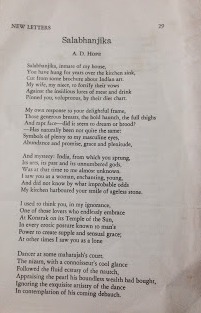
them as newspaper headlines, they would read: 'A.D. Hope Praises A Divine Image
Which Appears In His Kitchen', 'Hercule Poirot Whole Heartedly Appreciates
European Countesses'; 'Tess's Beauty Makes Her Stand Out From The
Crowd'; and 'Chilean Ambassador Rapes The Woman Who Cleans His House'.
What
do all these texts have in common? They are illustrations of how
those who occupy the exotic status are singled out for
public attention. That people who are called 'exotic' are often in
fact categorised and diminished by apparent praise, and actually
targeted by what seems to be admiration.
The Eye Of The Beholder confers both Power and Powerlessness on the person designated as exotic. Noticeably, those described in these anecdotes are women, because the nature of womanhood seems to invite accusations of exoticism by men. Unwanted attention and the Uncreating gaze combine, in an act of interest and curiosity fused with desire and frustrated possessiveness. Men usually 'wrote' women, and constructed them as the unfamiliar to themselves. So - in a male-constructed world, a woman is the most exotic of creatures.
This, to
quote the generous-minded and traditionally-built Precious Ramotswe from the
'No. 1 Ladies Detective Agency' series, is well known! Less well known is that
the famous Australian poet A.D. Hope wrote a poem which was a tribute to a
voluptuous image of an Indian goddess which his wife and niece had
affixed on the wall over the kitchen sink, as a role model for themselves in their quest to lose
weight and 'get in shape'. Seeing her form and features every day inspired
an endearing reverence in the poet.


In Agatha Christie's Poirot novels, the Belgian background of her detective
Hercule Poirot is central to her construction of him as a man profoundly
different from the homogenic British, to whom he seems like a 'mountebank' and
a 'jackanapes'. It is his brilliant brain, his generosity of vision, his
tolerance, his empathy, his profound knowledge of human nature, which
distinguish him. But it is his exotic, luxuriant moustaches which
characterise him. So it was in character for Christie to describe HP
as being attracted to exotic women:
The young Hungarian Countess Helena Andrenyi in 'Murder On The Orient Express' is described as an exotic beauty: scarlet lips and dark eyes. She speaks English 'a leetle', and 'her accent is charming':
"She lingered; her eyes watched him curiously.
Lovely eyes they were, dark and almond shaped, with very long black lashes that
swept the exquisite pallor of her cheeks. Her lips, very scarlet, in the
foreign fashion, were parted just a little. She looked exotic, and
beautiful."
It later turns out that this gorgeous young lady is
exaggerating her exotic appearance, to disguise her actual identity! But the
point is made - exoticism and beauty are equated, in syntax as they are in
life.
Christie is aware that what is so visually appealing is
easy to fabricate. In one of The Labours of Hercules, 'The Girdle of
Hippolyta', a female member of a gang of art thieves does a quick change
in the toilette of a train,
going from looking like an awkward schoolgirl, unremarkable daughter of a Minister
of the Church, to looking like 'a flashy piece of goods', appearing as the wife
of a man whose passport includes a wife. What were her props? Lipstick, nylons,
high heeled shoes, glorious little toque hat! What does her real face look
like? 'Possibly only the good God knows!' exclaims Poirot. Here, exoticism
because of the very familiarity of its brand and its constituent aspects and
elements is again seen as a passport and a cover.
Exoticism
comes naturally, however, to the Russian countess Vera Rossakoff, who appears
unforgettably in Hercule Poirot's old age as a vision on the escalator in the
London Underground. She is the definition of 'larger than life': a person of
"full and flamboyant form; her luxuriant henna red hair crowned with a
small plastron of straw to which was attached a positive platoon of brilliantly
feathered little birds. Exotic furs dripped from her shoulders.'' She is fond
of vibrant colours and layered textures, bedecked in jewels and draped in
the spoils of war and the trappings of wealth. She is a compendium of desirable
aspects: 'Chic. Sympathetic. Spirituelle... A femme du monde.' She also has a
tremendously buoyant, vibrant, articulate personality, and 'good lungs':
"To be content with what God gave you... That is arrogant!" she
exclaims. She is 'a woman in a thousand, a million'. She offers fascinatingly
detailed insight into what she does to keep up appearances. And 'she knew, none
better, how to flatter a man':
"Though it was something like twenty years since he had
seen her last the magic still held. Granted that her make-up now resembled a
scene-painter's sunset, with the woman under the makeup well hidden from sight,
to HP she still represented the sumptuous and alluring... the flamboyant
creature of his fantasy."
Christie observes that 'It is the misfortune of small precise men to hanker
after large and flamboyant women. Poirot had never been able to rid himself of
the fatal fascination the Countess held for him."
In her first appearance, she is described by Hastings as
"a whirlwind in human form,... a somewhat disturbing personality... who
invaded our privacy, bringing with her a swirl of sables .... and a hat rampant
with slaughtered ospreys." Her energy is full of the life force we
generally associate with men. It acts like a magnet on Poirot, who, full of
himself, respects the strong personalities of others. She disturbs him, and he
likes it. Note here that, in contrast to several other men in this
survey, Poirot focuses on her lungs and not her breasts. :) :) :) :)
:)
So exoticism
means only positive things to a broad-minded citizen of the world. And a man
full of brains as well as ego not only likes a woman who pays attention to him,
he enjoys hearing her speak. They are, despite their social class differences,
allied in their status as foreigners, in London.
But away from
the aristocracy of Central Europe, in the regional areas of England, to
other kinds of people, this luxuriance operates as an invitation to become
a predator. Particularly if the woman in question (unlike Poirot vis a
via his Countesses) is of a lower social class than the man who
appreciates her. We see this in Thomas Hardy's 'Tess Of The
D'Urbervilles', from the description of Alec's first sight of Tess:
"Tess had an attribute which amounted to a disadvantage just
now; and it was this that caused Alec d'Urberville's eyes to rivet themselves
upon her. It was a luxuriance of aspect, a fullness of growth, which made her
appear more of a woman than she really was. She had inherited the feature from
her mother without the quality it denoted. It had troubled her mind
occasionally, till her companions had said that it was a fault which time would
cure."
The quality her exotic beauty denotes? Is clearly an indication of sexuality
and sensuality, an invitation to the dance of life. And she has no shortage of
potential partners.
Alec articulates his frustration, when it takes him some time to get her to
respond to his meretricious advances: 'Good God!' he burst out, 'what am I, to
be repulsed so by a mere chit like you? For near three mortal months have you
trifled with my feelings, eluded me, and snubbed me, and I won't stand it!' He
wants to give her 'the kiss of mastery'. She seems to be asking for it, doesn't
she? Her luxuriance suggests so.
It is a familiar saying that Beauty is In The Eye of the Beholder. But
it would be equally true to say that Beauty is described as being in the Face
of the Beholder. And that the way the Beholder sees Beauty speaks volumes about
the Beholder himself. Our attitude to the Exotic is an index of our biases as
well as our preferences.
Take Tess for example. See how she appears, because of her
exotic beauty, to a lot of men: to Angel Clare, to Alec D'Urberville, to
the Captain of the Immortals, who 'sports' with her: as if she is unconsciously
appealing to them.
Her
luxuriance of aspect, her full figure, the red ribbon in her hair,
her beautiful eyes, seem to invite their attention. But does that attention
have to take the form of assault? She becomes a 'wounded name', a 'Maiden No
More', who cannot escape the consequences of her exotic allure. She actually at
one point in her struggles removes her eyebrows to stop people commenting on
her beautiful face, feeling her beauty to be inviting unwanted and predatory
attention.
I began this paper by commenting on the dualism of
perception which exoticism reveals in us. In this novel, the dualism is
externalised through characterisation of Alec and Angel as binary
opposites. Angel Clare, a better man than Alec, sees Tess from the start
in a more emotional and spiritual way than Alec does.
" 'What a fresh and virginal daughter of Nature that milkmaid is!' he said
to himself. And then he seemed to discern in her something that... carried him
back into a joyous and unforeseeing past, before the necessity of taking
thought had made the heavens grey."
Unlike Alec, who sees her as a 'crumby girl', to Angel 'Tess...seemed to
inhabit a dignified largeness both of disposition and physique, an almost
regnant power, possibly because he knew that ... hardly any woman so well
endowed in person as she was likely to be walking in the open air within the
boundaries of his horizon; very few in all England. Fair women are usually
asleep at midsummer dawns. She was close at hand, and the rest were
nowhere."
Here, as with A.D. Hope, we have a man who appreciates the divinity of women.
Hardy is explicit about it: "She impressed him most deeply. She was no
longer the milkmaid, but a visionary essence of woman - a whole sex condensed
into one typical form. He called her Artemis, Demeter, and other fanciful names
half teasingly, which she did not like because she did not understand them.
'Call me Tess,' she would say askance, and he did."
Here is a girl who can say 'No'. And a man who can accept it.
Tess can say this because she is being approached by a man who is more
evolved than most. He sees her sensitive feelings and her qualities
of mind, as well as her beauty of body. He sees her as a whole person, and
does not seek to separate her from her source, or reduce her. She can speak to
him, in the imperative voice.
In contrast, Pablo Neruda
expresses his own conflictedness as a justification for targeting, an
excuse for attacking, what he sees as other, several steps further in
his Memoirs, when he describes the sexual assault he himself perpetrated on a
Tamil maidservant while he was the Ambassador for Chile, in Sri Lanka in the late 1920s. It is a bizarre incident, for many reasons. I had been used to hearing
of Neruda as a great love poet and a man who had great sympathy for the poor
and oppressed.
What struck me from the first reading is the absolute brazenness of his
hypocrisy. He praises her beauty, and likens her to a goddess, like the statues
of goddesses in the temples of South India. But people worship goddesses, they
do not rape them. It is other human beings they assault. Particularly
those they consider vulnerable, in relation to them. This violent binary
opposition in the way beautiful women are seen and treated has been brilliantly
portrayed in the image we see here on the projector. Neruda's behaviour shows
the transition between the two conflated approaches, and their violent
outcome.
He offers
tributes, at first. He leaves gifts for her, knowing she is poor. Colourful
silk garments. But she ignores them. I get the impression that he was
incensed because she ignored him. Returning to the Orient Express, it was
Countess Andrenyi's alert and intelligent gaze that highlighted her beauty for
Poirot. She was not only beheld, she was a beholder in return. She wanted to
know what he thought, saying 'Why did you ask me that?' She connected with him.
In Neruda's case, in Wellawatte, he is made to feel invisible, and his advances are completely negated. One day, fuelled by both feelings of sexual desire and sociocultural and gendered entitlement, he decides to 'go for all'. He forces himself upon her. And he describes the act poetically:
Note that he describes her as a goddess 'made of stone', a 'statue'. She was silent throughout the encounter, and kept her eyes open. He states that 'that there was no language in which he could speak to her'. I wonder how SHE would have thought or spoken about the encounter. In HER memoirs.
My point is
that, by initially exoticising her, Neruda gives himself permission to do
whatever he likes to her. She becomes an object, in his eyes. Even if his
sexual imposition of his imagination, his desire, and his body on her was seen
by him as an act of worship, it was not an invocation to a superior deity.
It was, in contrast to the reverence expressed by A.D. Hope, an act of
self-worship. A glorification of his own virility and forcefulness.
Her thoughts,
her ideas, were not 'unknowable' to him. They were actually of no interest
to him. His use of the passive voice is very indicative of this: 'The
experience was not repeated', is the phrase with which he ends his
description. A dismissal. Distance. Literally a throwaway line. He saw
himself as a complex, living being, with a trajectory, a life. He saw her as an
object, an incident, along the way.
So, since
this Nobel Prize-winning poet seems incapable of basic human empathy,
I ask myself, 'How was the experience, for her'? (A question that Pablo
Neruda did not ask himself, let alone the unknown woman.) The power
differential between them is staggering: as a man of 25, as a Chilean
Ambassador, as a man in the 1930s, Neruda had all the power, in this encounter.
He was fully aware of her relative powerlessness in relation to him: as a
woman, as a servant hired to clean his latrine, as a Tamil from the 'pariah'
caste. Her powerlessness, refracted through the lens of exoticism, excited
him. He was able to blame her beauty for exciting his desire, and also use her
socio-economic status as a justification for his treatment of her. In a
real sense, her exotic beauty is used to excuse his response to it.
So as the honey-coloured deities we are, we people of colour,
we unusual, different, colourful people, should be careful when people pay
us compliments on our alluring beauty. It is a short step, easily taken, from
being admired - or worshipped - to being mistaken for a piece of
exotica.
In a more generous era, inhabiting the exotic status meant being admired.
Today, in a world where everyone is under stress, being seen as
different or other can get an exotic person attacked, accused, deported and
killed. It is a dangerous position to be in. And it is not a passive position.
People, in the end, return home from even the most exotic
holiday, back to a less unsettling, exciting and dangerous setting - which
they usually prefer. And what was initially seen by them
as alluring and exotic becomes an experience they once had, and eventually an
image on a fridge, and something to be boasted of, in a self-glorifying memoir.
Human beings are like that. We reach out for what we see as beautiful because
sometimes we feel empty inside, and our disrespectful touch depletes it, and
makes it wither on the vine. From The Wide Sargasso Sea, under a Bitter Moon,
we must be careful about how we are seen, and how our identities
are constructed, and by whom. And we must be thoughtful about
what, and how, we also in our turn allow ourselves to see.
Wednesday, December 28, 2016
Who’s The Fairest Of Us All? ‒ The Politics Of Colour Shaming
Remember the evil Queen in ‘Snow White’, who used to stand
in front of her mirror and ask this question? Dreading the answer, in case she
was not deemed the ‘fairest’ (which, in the fairy tale, meant ‘the most
beautiful’)?
'Mirror, Mirror, On The Wall, Who's The Fairest Of Us All?'
Image from Walt Disney's 'Snow White' (1937).
As people with dark skin, Sri Lankans face a challenge which
many of us are reluctant to recognise: that ‘white’ is seen as ‘privileged’ and
that not being ‘white’ or ‘fair’ is consequently seen as an inferior status.
And we see this projected onto us every day.
Many of the messages we absorb about our value and our worth
come from the advertisements we see in magazines, on television, at the movies,
and other media. The eye-opening part of this is that we in South Asia, who
endorse these advertisements, are perpetuating racist stereotypes and imposing
implied inferiority onto ourselves and our fellow citizens. By buying into and
creating this type of marketing, we accept an inferior status in the
contemporary world, in which fairer-skinned people are seen as an ideal, and
darker skinned are seen as comparatively lesser.
How Did This Happen?
Manisha Anjali, a poet and writer who has written
extensively on the subject of skin bleaching, comments that: “South Asia is in
desperate need of a skin-positivity revolution. White worship is an archaic
colonial hangover.”
One of the advantages of living in the 21st Century is that
we can evaluate the cultural myths that have been imposed on us: see how they
started, see through them, and set them aside, if they are damaging and
belittling to us.
The greatest cultural myth underlying colonialism is that of
the inherent superiority of the coloniser. White superiority was expressed
aggressively, through genocide, exploitation, humiliation, and pervasive
cruelty towards those of darker race, who inhabited lands rich in resources
which were coveted by the colonisers. The ‘Terra Nullius’ doctrine in Australia
declared the land on which dark-skinned indigenous people were living to be
‘uninhabited’, and thus available to be ‘settled’ and ‘developed’.
But the association of ‘darker’ with something lesser,
something less formed, more violent, goes back to far more primitive times.
Think about the common expressions: ‘Dark and Difficult Days’, ‘The Dark Lord’
(from the Harry Potter series), ‘On a Dark Night, There Came A Dark Man With A
Dark Purpose’ (from ‘Aladdin’), ‘The Darkest Hour Is Just Before The Dawn’,
‘The Heart of Darkness’ and ‘The Dark Ages’. Humans fear the darkness of the
night, which could be filled with unseen horrors, and this fear is evident in
the way we are threatened by the dark, and have to contain it, control it, and
protect ourselves against it.
This impacts on what we hear, when a 7-year-old is asked
what colour the bath water is after her bath. Does her skin colour wash off? So
that if she is cleaned up, she will look acceptable? And why is what is
acceptable, fairer?
This may seem relatively harmless at first hearing, as
children are too young to know what they are talking about. But children grow
up into adults, and carry their unquestioned beliefs with them. And some of
them become copywriters for advertising agencies.
A typical example of how beliefs of white superiority are
perpetuated is the targeting of high-end, luxury buyers through images
associating white-skinned people with unquestioned dominance and power.
Beauty standards: the whiter the better. Photograph courtesy
of Eleanor Blaxland-Ashby.
Note how the dominant figure in the above advertisement is a
white woman, centred and positioned with her gaze directed at the viewer,
conveying strength and power. See how the darker hued women around her have
their gazes averted from the viewer, or deferentially directed at the woman in
the central position. The African, East Asian, and South Asian women are
visually portrayed as occupying less powerful space in this portrait, and as
relegated to ‘minority’, and literally marginalised, status.
This experience of marginalisation is something that we
notice when we emigrate to places like the U.K., Europe, the United States,
Canada, New Zealand, or Australia. In these countries, dark-skinned people are
seen as a minority group, and our skin colour makes us visibly different from
the Anglo-Celtic majority in these societies. We should be aware that countries
like North America, Canada, and Australia are all societies created on the
genocide of their indigenous populations, who resemble us. And the immigrants
who were accepted into these countries often formed an underclass, whose
members are frequently physically similar in feature and skin colour to us.
People who judge books by their covers also judge immigrants
by their colour.
As immigrants, if we are fortunate, we have people
commenting on how ‘luscious’ we look, with our big, dark eyes and lustrous dark
hair. If we are unfortunate, we might be viewed by redneck racists as bush
pigs, or pieces of exotica. People show conflicted feelings towards our skin
colour, and as human beings are responsive creatures, we absorb this
conflictedness.
Colour Aspirations
What we aspire to be seen with, and seen to have, tells us a
lot about ourselves. What colour are our dreams? We fetishise and make icons
out of what we wish to be, and have. The size and location of our house. The
friends we associate with. The clothes and accessories we acquire. The books we
read, the events we attend. The food we conspicuously consume. What we look
like. What colour are WE, in our dreams?
There are two great ironies that are observable about this:
1) Many white-skinned people try, through sun tanning in
salons and on the beach, applying sun lotions, and using sun beds, to become
brown. They risk skin cancer to achieve the colour we are naturally born with.
In countries with wretched wintry climates, a tan signifies the ability to
travel to Spain or the Mediterranean, or to own a summer home, and thus denotes
further privilege.
2) We brown-skinned individuals, in contrast, are surrounded
by images and advertising in our own countries which shame us for our darker
hue. Skin whitening and bleaching products abound, and we are told that darker
shades of skin tone are ‘blemishes’, and ‘unsightly’. Marriage advertisements
specify fairer complexions as being the most preferred by potential husbands
and wives, and their extended families, and women and girls in particular from
a young age are praised for their relative fairness or criticised for their
relatively dark skin.
The condition of being ‘fair’ is seen as the attainment of
the state of perfection worth striving for, and by implication, darker skinned
people are seen as wanting, missing things that they need, and desiring things
that they have missed out on having.
Fair complexions have been associated with privilege and
higher socio-economic status for centuries, probably since those fortunate
individuals who did not have to work in the fields under a blazing sun to earn
their living were able to protect their complexions from harsh extremes of
climate and weather. Thus, radiant, fair, soft skin has become
a desirable asset to have, and to display: an indication of one’s
‘worth’ and ‘value’.
However, in the modern world, while many white women and men
are endangering themselves trying to become brown, brown women and some men
‒ even international
film stars! ‒ are endorsing products which promote skin-whitening. We are
all apparently dying to look more like each other!
The images presented to us of physical flawlessness via
global advertising show generically airbrushed people with smooth alabaster
skin. Only recently have golden brown or dark chocolate or coffee coloured
people been celebrated as beautiful. Supermodel Iman objected strongly to
someone saying that she was like a “white
woman dipped in chocolate,” because the ‘compliment’ implied that she was
beautiful because her features were acceptable to the white normative model of
beauty, as if her colour was like a topping on a dessert, or an accessory to an
outfit, and not part of her inherent self. In fact, the ‘compliment’ implied
that she was beautiful because her ‘inner whiteness’ shone through her dark
skin ‒ no wonder she was offended!
Supermodel Iman’s response to being told she looked ‘like a
white woman dipped in chocolate’.
What Are The Biological Facts?
Dark skin merely means that the skin has a greater degree of
Melanin. Along with this comes inbuilt skin protection from the sun, via a
degree of subcutaneous oil which keeps us looking relatively young. While white
skinned people develop freckles, creases, skin cancers, and dry skin, and
constantly try to ‘nourish’ their skin with external emollients, dark skinned
people age comparatively more attractively.
With our darker skin comes some physical negatives,
however. Acanthosis Nigricans
causes thickening of the skin and dark patches to appear on the body and face.
And when we are wounded, or recovering from surgery, our scars can be thicker
and darker, due to Keloid reaction.
Both of these are conditions which those of us with darker skin are more prone
to experience.
What Are The Historical Facts?
We all know that colonisation took place in history. But
that does not mean its impact has ended. It was based on racist assumptions of
cultural superiority and inferiority, and in our contemporary world these
attitudes are inflamed by immigration, refugee migration, and huge cultural
backlashes that we are witnessing against multiculturalism in countries like
the U.S., the U.K., and Australia. A recent
poll showed that almost 50% of people living in Australia actively
objected to immigration from countries in which people were seen as visually
different from themselves. In post-Brexit
Britain, there are pro-nationalist policies being implemented which
designate and define ‘British’ individuals, seeking to differentiate
‘essentially’ British people from those who are merely living in Britain to
improve their economic conditions by earning their living in British currency.
How far will these categories extend? Who will be included? Who will be
excluded?
Colour-coded targeting and profiling of people has
historical connotations which are racist, and unsettling. The Nazis during the
Holocaust forced their prisoners to wear colour-coded signs on their clothes:
Yellow Stars for Jews, Pink Triangles For Homosexuals, etc. Being called a
‘Chocolate Drop’ at school is not at the same level, but it is on the spectrum
of otherisation. Our skin and its colour is a visual designator: an imprint
that cannot be bleached or scrubbed off.
What should change is not the skin colour of people, but the
social and cultural attitudes that shame people for inhabiting their own
bodies.
Why Is Colour-Shaming Happening Today?
There is currently a narrowing of borders, a narrowing of
minds, and a diminishing of generosity which can be seen all over the world, in
every country where there is an immigrant population. This is part of a
backlash against policies of multiculturalism which in recent times are being
blamed for many of the social and economic ills besetting Western countries.
The most obvious differences between people are physical: in
our body shape and size, our facial features, our clothing and the colour of
our skin. This is why being dark and large-sized is often seen as a double
negative, in contemporary society, which along with its other superficial
attitudes, constructs our physical attributes as ‘assets’ or ‘liabilities’.
Plus-size positivism is one way of responding to this. So is dark skin
positivism.
Underlying racism often comes out into the open when
privileged territory is disputed, by dark-skinned and talented people. Let us
note the way the Obama family have been attacked since Barack Obama became the
first black U.S. President, 8 years ago. Michelle Obama has been called a ‘gorilla‘,
and her elder daughter a ‘monkey’ ‒ because they were boldly entering into and
legitimately inhabiting the whitest of white spaces: The White House. And
Harvard University.
First Lady Michelle Obama posing for her official portrait,
the first-ever first lady portrait to be captured digitally, in the Blue Room
of the White House in 2009.
Joyce N. Boghosian/TheWhite House
What Is The Impact Of This Imprinted Inferiority?
The association of dark skin with ‘lesser’ or culturally
despised status is intensified because it derives its impact from a number of
concurrent and co-existing factors, which operate simultaneously on those they
impact upon. And this message is strongly imprinted on us from a very young
age:
When we see the young children in the video above aligning
themselves with the doll who is ‘ugly’, ‘not pretty’, ‘bad’, and ‘not nice’;
and not to the white doll, whose white skin they associate with ‘niceness’ and
‘prettiness’, we can understand how we internalise ideas about our status from
a young age, and how difficult it will be to challenge external racism and
other inequities which makes us feel lesser, when we already carry those
terrible feelings inside ourselves, with a self-concept damaged by the
inequities of the society in which we live.
We are all aware that high-end designer labels in South Asia
are routinely sold to us using fair-skinned models. These images of people who
do not look like us, continually and subconsciously impact on us, excluding us
from identifying with the luxury and glamour, the wealth and success these
beautiful people, and the lifestyles they are associated with, create in our
minds.
It is historical fact that those of darker skin have been
objectified, vilified, enslaved, targeted, sexualised,
colonised, exploited, harassed, incarcerated, abused, and denigrated by
dominant white culture ‒ and those who perpetuate the dogma of white racial
superiority ‒ for centuries. Thus, being born dark-skinned in a racist world
immediately places us in a problematic relationship to the natural need and
wish for self-worth and self-fulfillment that is inherent in all human beings.
Dark skin colour is socio-culturally associated
with a problematic life.
Conflicted Visions Of Beauty
Exoticisation and eroticisation are yet another form of
targeting. Dark-skinned people are often presented as more sexualised and
sexually available than other races. So perhaps we should think twice when we
are called ‘hot’ because of our honey-hued skin and curvy bodies. We could also
be being designated as more alluring, and provocative ‒ and the attention we
receive may quickly become disrespectful and unwanted. People project fantasies
onto dark-skinned, ‘exotic’ people all the time. As they do to ‘exotic’
locations.
Dark = ‘Dirty’
This picture speaks a 100,000 words – all of them offensive.
These negative associations have powerful effects on us.
However strong our self-esteem is, we are implicitly told that to be beautiful,
we must not only exfoliate but also decontaminate ourselves from whatever
causes us to be diseased with a dark hue. Beauty rituals at spas all over the
country emphasise the whitening ‘benefits’ their products offer. Come into the
salon stressed, distressed, discoloured, weighed down (by the problems of the
third world) ‒ and leave uplifted, purified and ‘lightened up’. Your aura and your
skin will be radiant and glowing! Your ‘defects’ will be diminished! You will
emerge several shades lighter, from the wrapping and peeling and bleaching and
scraping and face masks and face peels, and all the absolving effects these are
guaranteed to have on us.
The products sold to us to ‘remedy’ our dark skin are
saturated with chemicals. Their physical impact on us becomes even more
dangerous when we are effectively told we should be ashamed of ourselves, in
advertisements which attempt to sell us skin whitening creams to lighten the
colour of our private parts, because sexual shaming is deliberately brought
into the wording of the advertisements as well, disguised as helpful advice, to
make the buyer more ‘appealing’ and ‘desirable’.
How Shaming Looks And Sounds
Human beings seem very good at shaming each other,
particularly where our physicality and sexuality are concerned. They often
treat it as a joking matter.
Our private body parts are not inherently ‘dirty’ or
shameful. Yet, because they are clothed and covered most of the time, they are
associated with aspects of ourselves that we feel are private and should be
protected from public gaze, and so are not exposed to air and sun as much as
the rest of our body. In freer societies, less constricting or covering
clothing leads to better circulation and less ‘unevenness of skin tone’.
Listen to the euphemisms used by advertisers, in the
interests both of political correctness and expansion of a client base. Look at
the implications of the image below, which is supposedly skin positive and
inclusive of diversity. Note that at the end of the spectrum is burnt toast,
which is inedible (and carcinogenic).
This image is often seen as a positive expression of colour
diversity. Image courtesy Pinterest.
The private parts and sexual organs of most human beings are
naturally darker than the rest of our bodies. Where white skinned people have
pinkish parts, we have brown or dark brown parts. This is surely nothing to be
ashamed of ‒ in fact, it is part of the diversity of the human race!
However, when you add the shame we are culturally taught to
feel about our sexuality to shame about the ‘discolouration’ of our private
parts, we get a powerful, product-selling message ‒ which people buy, along
with the products that these messages sell to them. But really, this shaming
needs to stop. We are not inserted into our skin: we are embodied within our
skin. We must surely learn to accept and embrace our embodiment, or be
separated all our lives from our inner sense of dignity and self-respect.
Many of our beliefs about ourselves begin in the comments
made about us from when we are young, by various well-intentioned (or
ill-intentioned) family members.
Manisha Anjali has showcased this in her poetic work ‘Sun God White Face’, which
“was composed when [she] was approached by editor Michalia Arathimos to
contribute to a special issue of Blackmail Press named ‘Piercing The White
Space’”.
Where Colour Shaming Starts And How It Can Be Challenged
It starts in the home. And it is perpetuated in the comments
we make about each other, and the way we speak to each other, at work and at
social functions. When we praise each other for looking ‘prettyyy’ or ‘so fair’
as if they are concepts that are interchangeable. When our elders tell us we
look so fair that we ‘could be European’, as if that was a compliment! To ‘pass
for’ being white! When such a high percentage of marriage advertisements rate
fairness, literally, as a desirable quality.
It is not just personal. It is also political. Martin Luther
King’s famous ‘I Have A Dream’ speech can be summed up by one telling phrase:
he wanted his children to grow up in a world where they would be ‘judged not by
the colour of their skin, but by the content of their character’.
We need to start re-thinking how we give and accept praise,
when it comes to our skin colour, and our appearance in general. We can
consciously praise qualities of character rather than physical features. We can
omit offering each other ‘complimentary’ comments about each other’s
complexions. We can choose a less superficial and less damaging way of relating
to each other.
We achieved Independence as a nation 60 years ago. It is
surely time we made ourselves free of this internalised and self-imposed
prejudice, as well. Unless we actually believe it ourselves, any racist
assumption of our inferiority as dark-skinned people need only go skin deep.
Featured image courtesy youthkiawaaz.com
Subscribe to:
Posts (Atom)